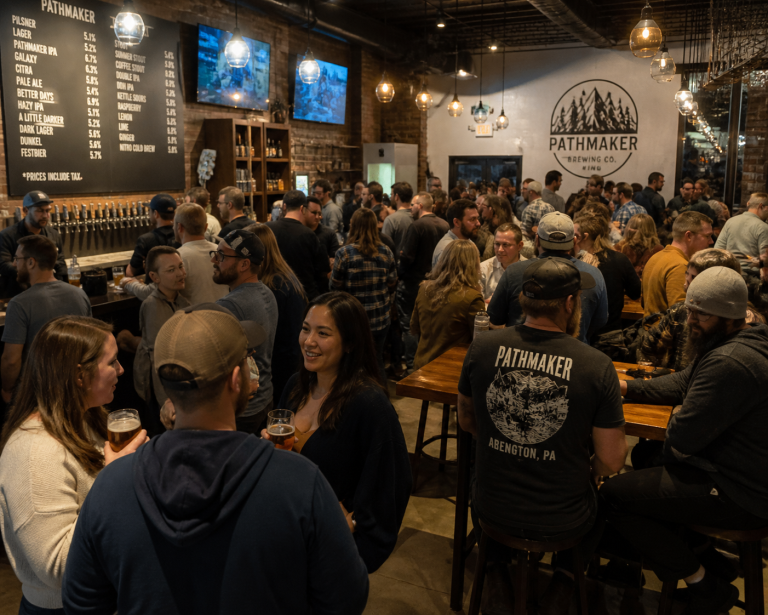
For many craft breweries, the taproom isn’t just a brand showcase… it is the business. If the majority of your revenue flows through your own doors and over your own bar, then every pint poured, every visit extended, and every guest converted into a regular customer matters. A LOT.
The good news is that, unlike distribution sales, you control nearly every variable of the taproom experience. The challenge? So does every other local bar, restaurant, or taproom competing for the same local audience.
Increasing taproom sales isn’t about one silver bullet. It’s about layering operational excellence, smart programming, and intentional guest experiences into a system that consistently drives higher spend per guest and more frequent visits.
Here’s how to do it.
The longer someone stays, the more they spend. Full stop.
But dwell time doesn’t increase by accident. It’s engineered.
Start with your physical space. Seating variety matters more than you think. High-tops for quick stops, communal tables for groups, and comfortable lounge areas for longer stays all signal different use cases. If every seat feels like it was designed for a quick pint and an even quicker getaway, people will treat it that way.
Lighting and acoustics are equally important. If your taproom is too loud to talk or too dim to feel welcoming in the afternoon, you’re unintentionally capping visit length. A comfortable butt is one that stays in its seat for longer.
Actionable takeaway: Audit your taproom from a guest’s perspective. Ask yourself: What would make me stay for one more beer?
More options don’t always mean more sales. In fact, overly complex tap lists can slow decision-making and reduce throughput at the bar.
Instead, structure your menu to guide behavior:
Descriptions matter. A guest who understands what they’re ordering is more likely to order confidently, and to order again. Samples and an educated staff are also vital for helping guide the customer to the choices most likely to surprise and delight them.
Also, don’t ignore non-beer offerings. Whether it’s N/A options, food, or a tight selection of wine/cocktails, you reduce the risk of losing a whole group due to one picky member, and add more revenue to the tab.
Actionable takeaway: Highlight 2-3 “featured” beers at any given time that you want to move, and train staff to talk about them.
Your bartenders are your most powerful revenue lever, and often your most underutilized one.
Great taproom staff do three things consistently:
This isn’t about turning your bar into a sales floor. It’s about hospitality that naturally increases the average spend.
Simple scripting helps:
Also, incentivize performance where appropriate. Even small recognition programs can shift behavior meaningfully.
Actionable takeaway: Run short, weekly staff tastings and talking-point sessions so your team feels confident recommending beers.
If your taproom relies on repeat local traffic, you need to give people a reason to return frequently.
That doesn’t mean constant events. It means intentional programming.
Consider a rhythm:
The goal is predictability with enough variation to stay interesting.
Consistency is key. A well-run weekly event that reliably brings in 40-60 people will outperform sporadic “big” events that are hard to execute.
Also, think beyond traditional events. Community-driven gatherings such as book clubs, industry nights, or hobby meetups often create deeper loyalty.
Actionable takeaway: Build a simple monthly calendar and stick to it. Promote it everywhere: taproom, email, social, etc.
People rarely come to taprooms alone. Your revenue depends on groups, and groups behave differently than individuals.
A group’s decision-making is slower, but their spending potential is higher.
Make it easy for groups to:
Also, remove friction:
If groups feel friction, they leave earlier. If they feel taken care of, they stay and order more.
Actionable takeaway: Observe a busy night. Where do groups get stuck or confused? Fix those moments first. Think like your customers.
You don’t need enterprise-level systems to make smarter decisions. You just need to track the right things.
At minimum, pay attention to:
Use this data to:
For example, if Tuesday nights are consistently slow, that’s an opportunity, not a problem. Build something around it, and make it work for you.
Actionable takeaway: Review your weekly sales trends every Monday. Make one small adjustment based on what you see.
Getting someone in the door is only half the battle. The real value comes from turning that first visit into a habit.
Start with the basics:
Then layer in retention:
You don’t need a complex loyalty program, but you do need some way to stay connected.
And if you ARE looking to add some digital firepower to your loyalty and rewards, we recommend reaching out to the folks at TapWyse. We even have discounts available through the Beer30 Marketplace for users.
Actionable takeaway: Train staff to ask first-time visitors how they heard about you, and to invite them back before they leave.
Pricing in taprooms is often driven by instinct or fear of being “too expensive.” But underpricing can hurt your business just as much as overpricing.
Consider:
If your taproom delivers strong value (great beer, great atmosphere, great service) you have room to price accordingly.
Also, use pricing to guide behavior:
The goal isn’t to maximize price per beer. It’s to maximize the total customer spend per visit.
And remember the Middle Option Bias: people tend to opt for the middle of any three (or five, or seven) options. Use that to your advantage and price your highest margin beer appropriately!
Actionable takeaway: Test small price adjustments on select items and monitor the impact on sales.
Cleanliness, speed, and consistency don’t show up on Instagram, but they drive repeat business.
A slow bar kills momentum. Dirty glassware kills trust. Inconsistent beer quality kills loyalty.
Operational excellence isn’t flashy, but it’s foundational.
Focus on:
If these basics aren’t dialed in, no amount of marketing will fix your sales problem.
Actionable takeaway: Do a quarterly “mystery shop” of your own taproom. Honestly assess the experience.
The most successful taprooms aren’t just places to drink. They’re places to belong.
When people feel connected to your brewery, they visit more often, spend more per visit, bring friends, and advocate for your brand.
Community doesn’t happen overnight. It’s built through consistency, authenticity, and engagement. It’s a choice you make, and an action you undertake, every single day as a business.
Show up for your customers, and they’ll show up for you.
Actionable takeaway: Identify your regulars and treat them like insiders. They’ll become your best evangelists.
Increasing taproom sales isn’t about chasing trends. It’s about refining the fundamentals and executing them consistently.
Focus on:
Do those things well, and never forget that experience is the core of good hospitality, and your revenue will follow.
The breweries that succeed in their own taprooms aren’t just making great beer. They’re delivering an experience people want to come back to, again and again.
And in a crowded market, that’s the real differentiator.

