October 17, 2026
By Pulkit K. Agrawal, Founder and CEO
Nine years ago, on October 17, 2017, I started The 5th Ingredient with an idea to help breweries actually use their data for meaningful improvements in their business.
Brewers spend hours to days experimenting with ingredients, processes, and making the best beer that they can – and yet, the missing link in the industry was a software focused on the brewer rather than the accountant.
Today, The 5th Ingredient has multiple software lines with Beer30, Bucha30, Beer30 Lite, Beer30 NetSuite, and more to come soon. We’re constantly evolving with innovative industry updates like our Beer30 Command Center, our AI Beer30 Insights Modules, and our friendly AI chatbot known as Pinty. Our mission remains the same as Day 1, and as a team, we ask ourselves the same question daily, “How does The 5th Ingredient empower breweries to gather data, drive profitable growth, and ensure consistency and quality of every pint brewed?”
As a founder, building a company has taught me lessons about people, products, finances, legal, accounting, and my own responsibilities when it comes to becoming an industry leader. Some of those lessons are very exciting. Others involve difficult conversations and knowing when to pivot directions. But looking back at the last nine years, these lessons have been critical to learn, and I want to share them with other entrepreneurs, brewery owners, business executives - whether present or future - so that they can learn from the same wins and hard lessons that I experienced from time to time.
And so, as we celebrate our ninth anniversary, here are nine lessons I’m carrying into year 10.
Back in November 2017, when I created the first code repository, there would be many days and nights of coding hackathons and learning on the fly! I had enough coding experience to build out our initial Beer30 v1 – not perfect in any way, but a ‘good enough’ solution to see if the industry needed what I had in mind.
In order to see if brewery owners and brewers would want it, I started connecting with other breweries in my local San Diego area to get their feedback on what I had built. As a founder, I needed a vision and conviction of my idea, but I also needed the humility to recognize when my assumptions were plain wrong.
I learned that the best way to get that answer is to interview customers directly to find your Product-Market fit. There were features that I thought were valuable, but the real test came when asking a customer if this will actually solve the problem that they have.
There were processes that would work for one brewery, but had no bearing on another brewery that was of a different size or business model. I remember when one of the early users told me that they had UNI-tanks, where they both brewed and packaged from… Coming from Ballast Point Brewing, I had never heard of that, as all we had were FVs and BBTs. That night, I had to actively code out the system to have UNI tank capability, and that journey of accommodating the breadth of workflows and operations across the industry has never stopped.
Finding Product-Market fit requires listening carefully and understanding how your customers actually work and run their operations. A brewery’s priorities become much clearer when you look beyond a feature request and ask what someone is trying to accomplish. Goals matter more than specific workflows, and outcomes matter more than strict processes. As you start working towards those specifications in the Product, you then start finding your Ideal Customer. Once the suggestions converted into an actual paying customer, I knew I was on the right path. And over time, that Ideal Customer Profile will also change!
As a company, this is an ongoing process and a responsibility that never ends. At every conference, demo with a prospect, or a current customer call, the rest of the team and I are always asking others for feedback and seeing what is or isn’t working. As breweries change over time, we have to keep earning our place in their operations. If the industry continues to evolve, we have to evolve with it.
When I first started the business, I was a solopreneur. As I was visiting different customers (see point 1 above), I met Ryan Allis, who was also a Co-Founder at Protector Brewery. During those first couple meetings, we both found a mutual fit that we could both work together on the Beer30 product. Eventually, after my 8-month journey as a solopreneur, Ryan joined on as Co-Founder and COO in June 2018.
Once we had our own “Product-Market fit” of being able to work together on Beer30, we also had to align on key vision questions like our long-term goal with the business, our salary goals, and the roles and responsibilities that excited us. It went beyond just coding the product – we had to look at sales, marketing, finances, accounting, customer support, onboarding calls and WhatsApp tickets, and more. Making sure we were aligned on these key questions was essential to know that we were both rowing in the same direction.
Quickly after beginning to work alongside one another,it became clear that we needed Operating Agreements in place. We worked with a local lawyer to make sure we had the legal documents in place to make sure we were a legitimate business with documentation for key questions of ownership equity and decision-making authority. A key pillar that I recommend for all founders is to never be in a position where individuals have an even split for decision making power (whether that’s 50%-50% for two people or another variant). The worst case scenario is to have a deadlock in place and to be in a position where the owners are not aligned on the long term vision or goal of the business. Have the conversation early to figure out who has majority control to make the final decision.
After Ryan wrapped up with the business in June 2025, we spent time working through the ins-and-outs of a Founder Buy-Sell Agreement. These conversations deserved thoughtful attention and qualified professional guidance, and eventually, we figured it out. In hindsight, it would have been better to have had this documented within the first few weeks of working together, but since we hadn’t created that, we worked through the challenges real-time while maintaining positive intent for each other’s own life paths and trajectory, and keeping the relationship intact. When everyone understands their commitments, there is a stronger foundation for navigating difficult situations.
Enthusiasm gets a company started. Clear expectations help it move forward. My advice for any founder is to address these topics early and make sure you’re staying aligned as time progresses.
One of the most common sayings you will hear on business podcasts or read in leadership articles is the phrase “Hire Slowly, Fire Quickly.” Every person you bring into a company influences its culture, its customers, and the rest of your team.
Looking back at the last nine years, there were definitely times when we should have approached our team roster differently.
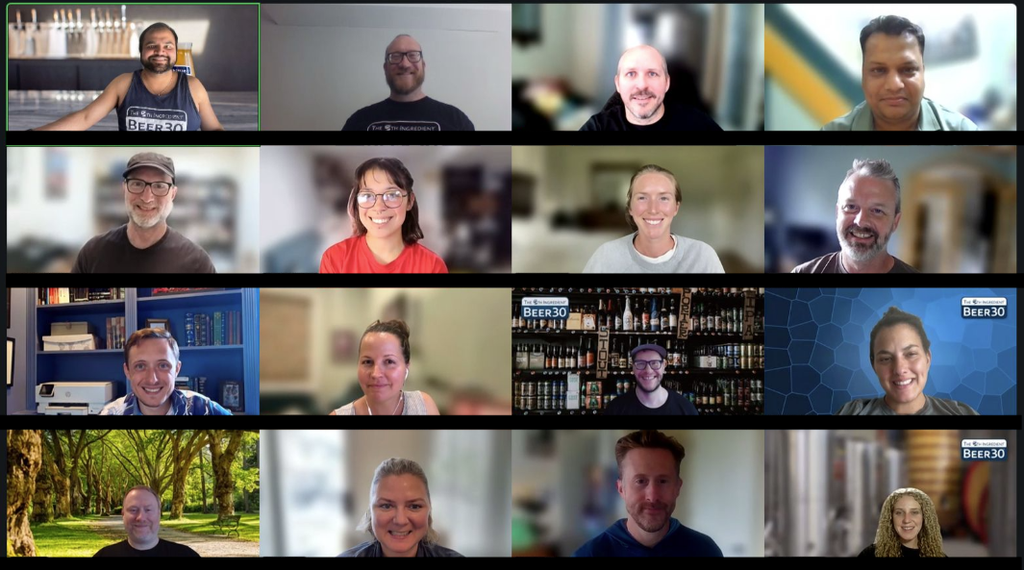
Hiring is one of the most consequential responsibilities that I have as a CEO and as a leader. “Hire slowly” entails being thoughtful and calculated when bringing on a new team member. I have made sure to always take the time to define the role ahead of any search to make sure we truly have the roles and responsibilities aligned. During the interview process, I make sure that multiple people (both internal team members and external consultants to help interview) are able to weigh in on the candidate's strengths and weaknesses. Ultimately, at the scale of our business (our head count has always been less than 24 people), I make the final call on whether or not we bring on an employee. I’ve learned that more often than not, my intuition is accurate on how a candidate will perform in our organization based on those interviews, and as a Founder and CEO, it’s important to listen to that gut feeling.
The second half of this lesson requires just as much care. “Fire quickly” means addressing problems directly, providing clear feedback, and recognizing when a working relationship isn’t going to succeed. People deserve fair expectations and an opportunity to meet them. But once the decision becomes clear, postponing it can make the situation harder for everyone involved. The most fair thing you can do for your remaining team, and for the individual you’re letting go, is to rip the bandaid off when you know it needs to be done. Experience has taught me that when employees start seeing that writing on the wall, performance suffers. I want to build a team where people can succeed. Sometimes that requires making a difficult decision promptly and respectfully.
When you’ve invested time, money, and energy into a product, it’s easy to become attached to its potential, rather than its actual performance. This applies in both the world of alcoholic beverages and in the world of software.
As a CEO, I am constantly looking at what is or isn’t working in our business. Every decision needs to be made by actually evaluating performance. Are customers using it? Does it solve a meaningful problem? What does version 2 or 3 of this update look like? What else could our team accomplish with the resources we’re putting into it?
Ultimately, the data indicates what comes next. Either we have to improve the product feature, or we have to kill it. It’s important that we don’t focus on the sunk cost fallacy.
Sometimes, the answers result in us truly revamping an existing solution because customers are not that happy with the way it works.
Here is an example of the Brew Log in Beer30 Transition from v1 to v2:
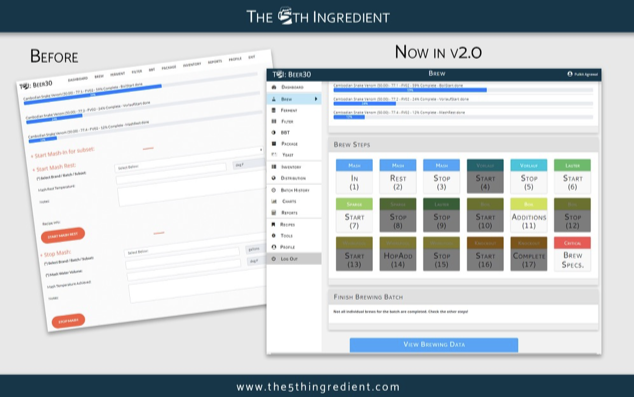
And then additional improvements to a Beer30 Brew Log version 5. (Note, we’re now in Beer30 software version 11.x)
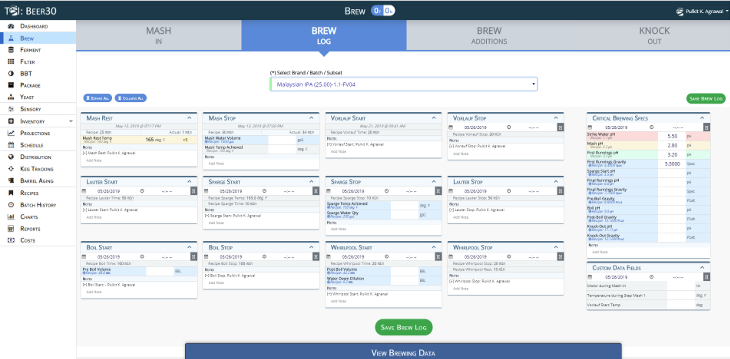
Since then, the brew log has had hundreds of updates based on customer feedback.
Sometimes the product evaluation points to going an entirely other way.
About 2 years into the journey, we built out a full keg tracking module based on serialized kegs. We had asked customers what worked best, and after we failed to get the adoption that we needed, we decided it made sense to kill it. Instead, we used some of the architecture to build out the first iteration of our Barrel Aging module as it had the similar architecture between serialized kegs and barrels. From there, we actually surveyed more customers and over time built out our Finished Goods Traceability module that went beyond just the tracking of kegs to include the batch details for all cans, bottles, and kegs.
The effort already invested deserves recognition, but it can’t determine every future decision. My responsibility is to direct our attention toward the work that will create the most value for our customers and for our company. Knowing when to stop is part of building.
Pricing models have to keep adapting as the industry changes.
On the supply side: When I first started this business, there were effectively 3 major incumbent brewery management software programs in the industry. In the present day, I think we are up to 17+ brewery software and inventory management platforms, with a few more probably coming out in the next year. As different companies bring their pricing, we’ve chosen to adapt and pivot our own pricing. No company exists in a vacuum, and responding (or electing not to respond), is essential to staying competitive.
On the demand side: As the brewing industry (and alcoholic trends as a whole) is going through its own financial reckoning, brewery customers have become very price-conscious. Operating costs, budgets, production volumes, and business priorities all affect what customers need from their software and how much they’re willing to pay. When a customer has to shut down their business, it impacts our business as well, and so we need to do what we can to support the industry. That’s really what inspired the decision to create Beer30 Lite at $30 USD / month. #WorksGreat #LessBilling
Any pricing model needs to make sense for the customers you serve and for the business delivering the product. As our platform develops, I have to keep asking whether our pricing and packaging reflect those realities. That means understanding the value we provide, listening to customer feedback, and being willing to adjust.
It also means supporting the people, service, and ongoing development that customers depend on. Pricing is a continuing business decision, and one that has to serve both the market and The 5th Ingredient. It needs regular attention as both our company and our industry evolve.
Revenue is an important measure of progress. But more importantly, profitability determines whether you can meet your commitments and keep building. This is the key to being able to make payroll or not in the coming months. I know for a fact that this exact question of payroll is what can keep founders up at night, as I’ve been there myself.
One of the key tenets I told myself when I started this 9 years ago was to build a sustainable, profitable business. Since we have been fully bootstrapped from day 1, with $0 in outside debt, profit is what lets us scale organically based on the industry. Without external investors, I have enjoyed the flexibility to make the decisions that we think are best for the business.
As a CEO, I need to understand when money is coming in, when it is going out, and what obligations are ahead on a monthly basis. I monitor our P&L and Balance sheet monthly to make sure I understand how we’re doing as a business. Growth adds responsibilities: people to support, products to maintain, and new investments to make. A clear financial picture helps to make those decisions with greater confidence.
A strong sales pipeline is just one aspect of cash flow. Profit, on the other hand, is everything. As I always tell my team, “It’s not official until money hits the bank.”
This is one of the lessons that connects our business closely to the breweries we serve. Whether you’re developing software or producing beer, understanding your finances gives you more control over your future, and more flexibility if things don’t go exactly according to plan.
As a company grows, it needs clearer roles, responsibilities, and processes. Those structures should help people do their work and solve problems. They should also leave room for someone to say, “There’s a better way to do this.”
As part of our Company Values, we strive to maintain an acronym that we call TICIPA – Trust, Innovation, Collaboration, Inclusivity, Passion, and Adaptability. All of our employees maintain this set of values on a daily basis and in how we work together. At our monthly All Hands Meetings, we do company shoutouts for employees based on these values (and have even created a fun Company Mascot for TICIPA).
With this approach, new ideas are encouraged, regardless of where they come from in the organizational structure. A customer issue may involve several teams. An employee may recognize an opportunity that falls outside their immediate responsibilities.
Good ideas need a practical path to go from idea to action, where employees feel like they are swimming with the current, through support and encouragement instead of fighting the current. As CEO, I have a responsibility to make that path accessible. That means encouraging people to raise issues, bringing the right people together, and establishing clear ownership and accountability so that improvements actually happen.
I’ve learned that each CEO needs to work on building out the Company Values that really embody their team’s energy and trusting the team to model them. A true leader builds that level of trust and safety to allow for change. The structure we create should help the company respond and evolve alongside the challenges and opportunities it faces.

As a founder, I can always see another detail that we could improve before releasing a new product, feature, or marketing campaign. Another tweak. A cleaner experience. A more polished explanation. (If you know any employees here, you can ask them personally about my level of desire for detail and perfection, at times.)
But, after spending weeks developing v1 of the Beer30 software, I quickly learned that it would never be perfect when we had our first customers actually get in there and use it. (Remember UNI-tanks in #1?)
But at some point, we need to put our work in customers’ hands and learn from how they use it. Their experience provides insight we can’t fully reproduce internally. And sometimes, good enough is exactly that: good enough.
A new game that we’ve started to do in our weekly leadership meetings is “Pop the Balloon” – effectively a risk assessment for each new idea where we try to find the holes in an idea and see how the balloon would pop, or what we need to do to patch the balloon. It lets us see what would be a ‘good enough’ solution to get out the door and execute upon it.
Breweries rely on our software to run their operations, and so quality, accuracy, and reliability matter. At the same time, waiting for every detail to feel perfect can delay something useful and prevent us from getting the feedback needed to improve it and test our assumptions.
This is the simplest lesson on the list: take more photos. I have been doing a photo a day project for 10 years now on Instagram — #photo3652 — and have over 20,000 photos that tie in with industry events over the last 9 years.
Here’s your reminder – take photos during brewery visits, at events, when the team comes together, and when something you’ve worked hard on finally launches. Capture the everyday moments too, that include the highs and lows. At one of the trade shows in Australia, a vendor actually embroidered a Beer30 Selfie King hat for me as a gift!
When you’re focused on the next task, it’s easy to move past a milestone without appreciating it. Looking back nine years later, those moments help tell the story of the company, the people who shaped it, the challenges, and more!
The numbers can show how a business has progressed. Photos help you remember what that progress felt like.
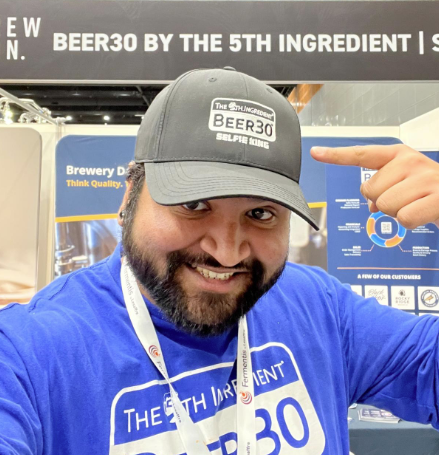
When I think about The 5th Ingredient’s ninth anniversary, I think about the people who have made this journey possible.
To our customers: thank you for trusting Beer30 with an important part of your business. Your questions, feedback, and ambitions continue to shape our work.
To my team: thank you for the care and effort you bring to our customers and to one another. We have only made it this far because of your continuous desire to keep making each day better than the previous.
And to my parents, sisters, partner, family, friends, mentors, advisors, and everyone who has supported us along the way: thank you for being part of The 5th Ingredient story.
Nine years in, and I remain excited by the opportunity ahead. There is still so much we can do to help breweries understand their data and to use it to help their businesses run more effectively and sustainably.
And, if you’re interested in having Beer30 at your brewery, book a demo here today.
I’m proud of what we’re building together, and I’m looking forward to Year 10!
Cheers and beers,
Pulkit K. Agrawal
Founder and CEO, The 5th Ingredient