
By Ryan Mayfield of Craft Leadership
There comes a moment in every brewery’s life when growth stops feeling exciting and starts feeling exhausting. The tanks are full, the taproom is busy, the distributor is calling, and suddenly the same creative energy that launched your brewery now fuels 80-hour weeks, endless decisions, and the creeping worry that you’re losing the magic that made you special.
Scaling up isn’t just about producing more beer; it’s about multiplying leadership, communication, and trust. Without that foundation, growth quickly becomes chaos. The good news is that you can expand without losing yourself, your people, or your culture, but only if you grow intentionally.
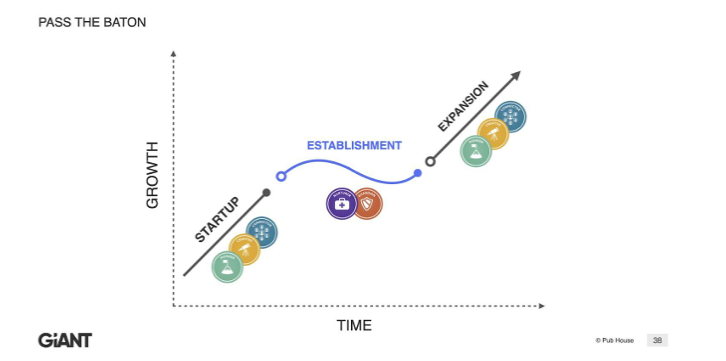
Breweries evolve in distinct phases, and each phase demands different leadership strengths. In the Pass the Baton tool, the journey moves through Startup, Establishment, and Expansion, each powered by different kinds of leaders.
● Startup: When you first launch, energy and innovation are everything. You need big ideas, bold risk-takers, and relentless drive. This is where the Creative* and Pioneer* voices shine; they see the vision before anyone else can.
● Establishment: Once things stabilize, the focus shifts to consistency, systems, and culture. The brewery now needs Nurturers* and Guardians* to bring structure, clarity, and sustainable rhythm.
● Expansion: As you grow into regional or national distribution, leadership must again shift gears. This phase demands Pioneers* and Connectors*, people who can cast vision, build partnerships, and inspire others to carry the mission forward.
Many breweries get stuck between Establishment and Expansion because the founders never pass the baton. They are still trying to do everything themselves: brewing, managing, selling, hiring, long after the business outgrew that model. The result is burnout at the top and confusion everywhere else. Growth isn’t just about doing more; it’s about empowering more people to lead well.
*Don’t Know Your Voice Yet?
Every leader operates from a natural “voice,” the way they see the world and influence others.
Before you start scaling, take the free 5 Voices Assessment to discover your leadership voice: yourteamworkcoach.giantos.com/store/5-voices.
Knowing your voice helps you understand what you naturally bring to each growth phase and where you might need to invite others to balance your leadership.
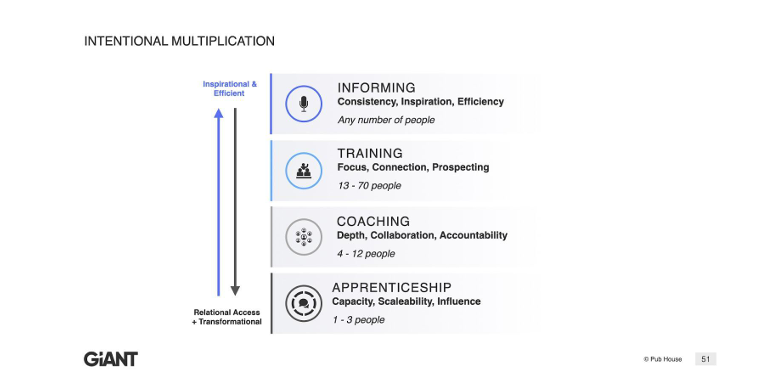
Scaling sustainably requires more than adding tanks and tap handles; it requires multiplying clarity, communication, and capability. The Intentional Multiplication framework outlines four layers of growth that every healthy organization cycles through:
1. Informing – This is how you reach everyone. Use this layer for consistency and inspiration: team updates, newsletters, or all-staff meetings.
○ Focus: Consistency, Inspiration, Efficiency
○ Reach: Any number of people
2. Training – Focused sessions for groups of 10–70 people. Teach specific skills or processes that reinforce your culture.
○ Focus: Focus, Connection, Prospecting
○ Reach: 13–70 people
3. Coaching – Small groups (4–12 people) where accountability, collaboration, and growth happen. This is where leaders learn to apply what they’ve been taught.
○ Focus: Depth, Collaboration, Accountability
4. Apprenticeship – The deepest level of transformation. You invest in one to three individuals, giving them real responsibility and walking with them as they learn to lead.
○ Focus: Capacity, Scalability, Influence
Most breweries stop at training, holding meetings, creating SOPs, or sending people to a class. But training alone doesn’t multiply leadership. Real multiplication happens at the coaching and apprenticeship levels, where values and habits are transferred through relationship, not PowerPoint slides.
To scale your brewery without losing your culture, you must scale your people development with the same intentionality that you scale your production.
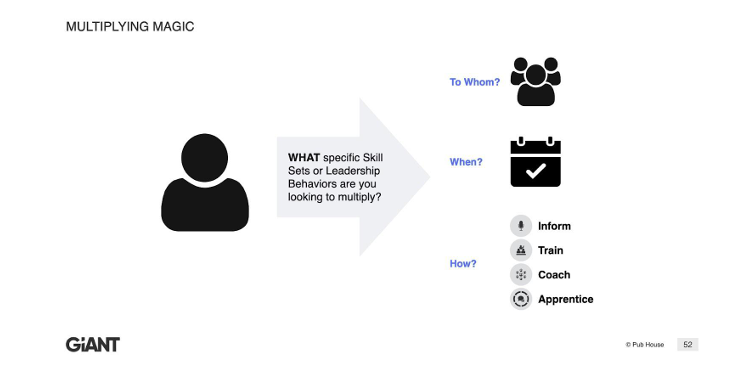
Once you know what to multiply, the next step is to systematize how it happens. The Multiplying Magic tool breaks it down into three simple questions:
1. What specific skills or leadership behaviors are you trying to multiply?
○ Examples: clarity in communication, delegation, coaching habits, cross-department collaboration.
2. To whom are you multiplying them?
○ Department leads? Shift brewers? Taproom managers?
3. When and how will you do it?
○ Through weekly meetings? Apprenticeship pairings? Monthly coaching calls?
Example:
Your head brewer has mastered consistent quality and recipe handoffs. Instead of trying to oversee every shift, they coach one or two shift leads on process ownership. Those leads then apprentice others, multiplying quality through people rather than control. Meanwhile, the GM trains department heads to use structured communication tools in meetings. The owner holds quarterly “Informing” sessions to share the big picture and celebrate progress.
When you align these layers, your brewery becomes a leadership machine, each person learning, applying, and teaching the next.
Scaling culture is harder than scaling beer, but it’s far more valuable. When your brewery opens new locations or expands distribution, your “way of working” gets tested. Without structure, every team will invent its own version of your culture.
Here’s how to protect what matters most:
● Codify your core values. Write down what they look like in action. For example, if “community” is a value, define how it should show up in both customer interactions and internal relationships.
● Create a simple leadership playbook. Outline your meeting rhythms, feedback tools, and conflict-resolution process. Consistency creates confidence.
● Make culture part of onboarding. Every new hire should understand not just what you do, but why you do it that way.
● Train your trainers. Every new location or department should have someone who can both embody and teach your culture.
● Model rest and boundaries. If the owner never takes a day off, the team won’t either. Leadership burnout is contagious.
Culture doesn’t scale by accident. It scales by design.
Expanding from a small brewhouse to regional or national distribution is one of the hardest transitions a brewery can make. The temptation is to chase growth at all costs, but the true cost of growth done wrong is your people, your quality, and your peace of mind.
The breweries that endure are the ones that grow on purpose. They don’t just multiply production; they multiply leadership. They know when to pass the baton, when to inform, when to coach, and when to rest.
So here’s your challenge:
This quarter, identify one behavior or leadership habit your team needs to multiply: clarity, consistency, accountability, or collaboration, and build a simple rhythm around it.
Because scaling up doesn’t have to mean burning out. With intentional systems, a strong culture, and shared leadership, you can grow your brewery and keep your soul intact.

